

Herculaneum
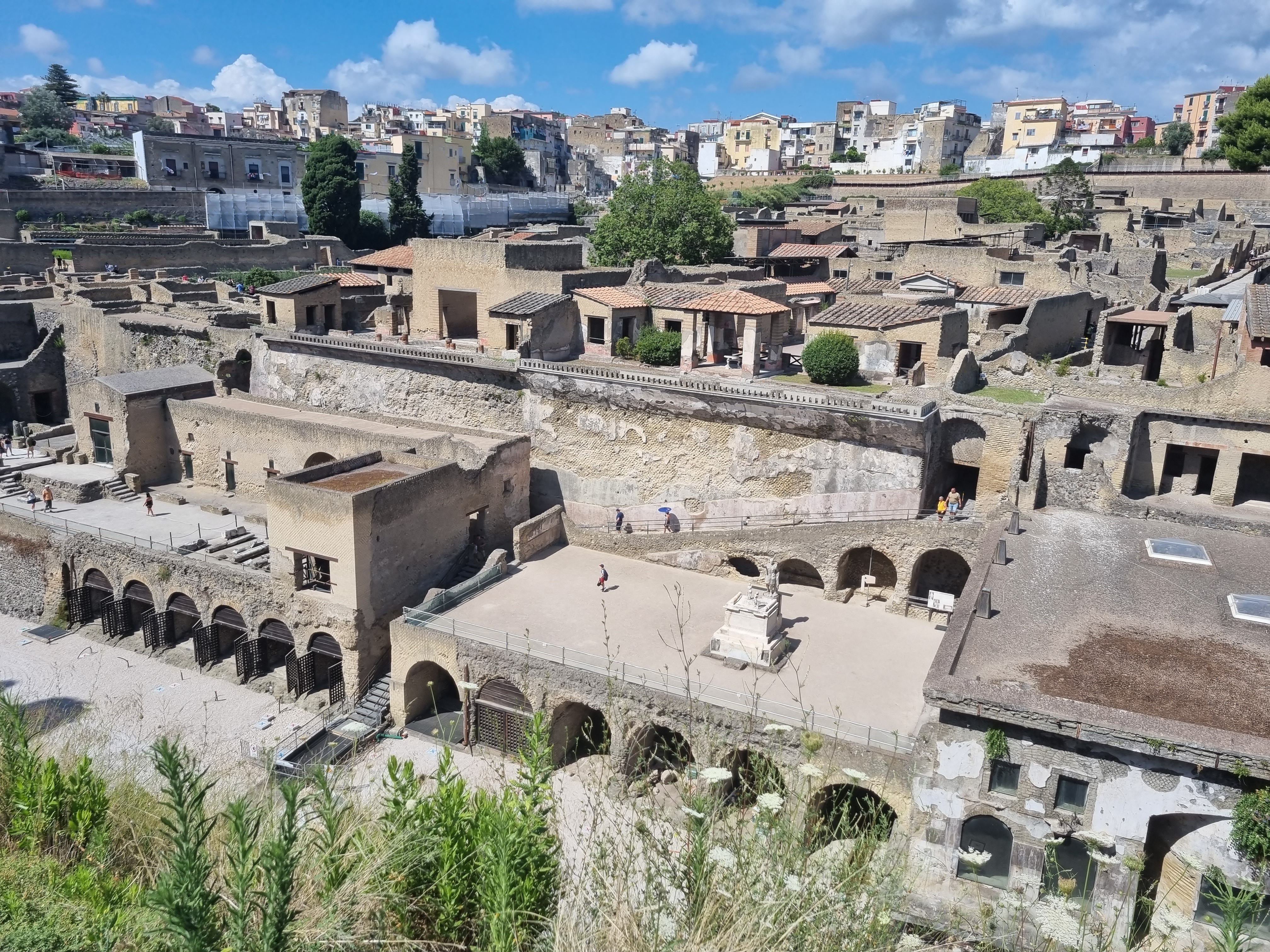
Herculaneum (in Italian, Ercolano) is one of the most remarkably preserved urban archaeological sites of the ancient Roman Empire. Located in the Bay of Naples, at the western foot of Mount Vesuvius, the town was buried by the volcanic eruption of AD 79, the same disaster that destroyed Pompeii. However, the two sites offer distinct experiences: Herculaneum is smaller in scale, with a more compact urban layout, and features preservation phenomena that are rare in Mediterranean archaeology.
- Cash
- Parking available
- Bank card accepted
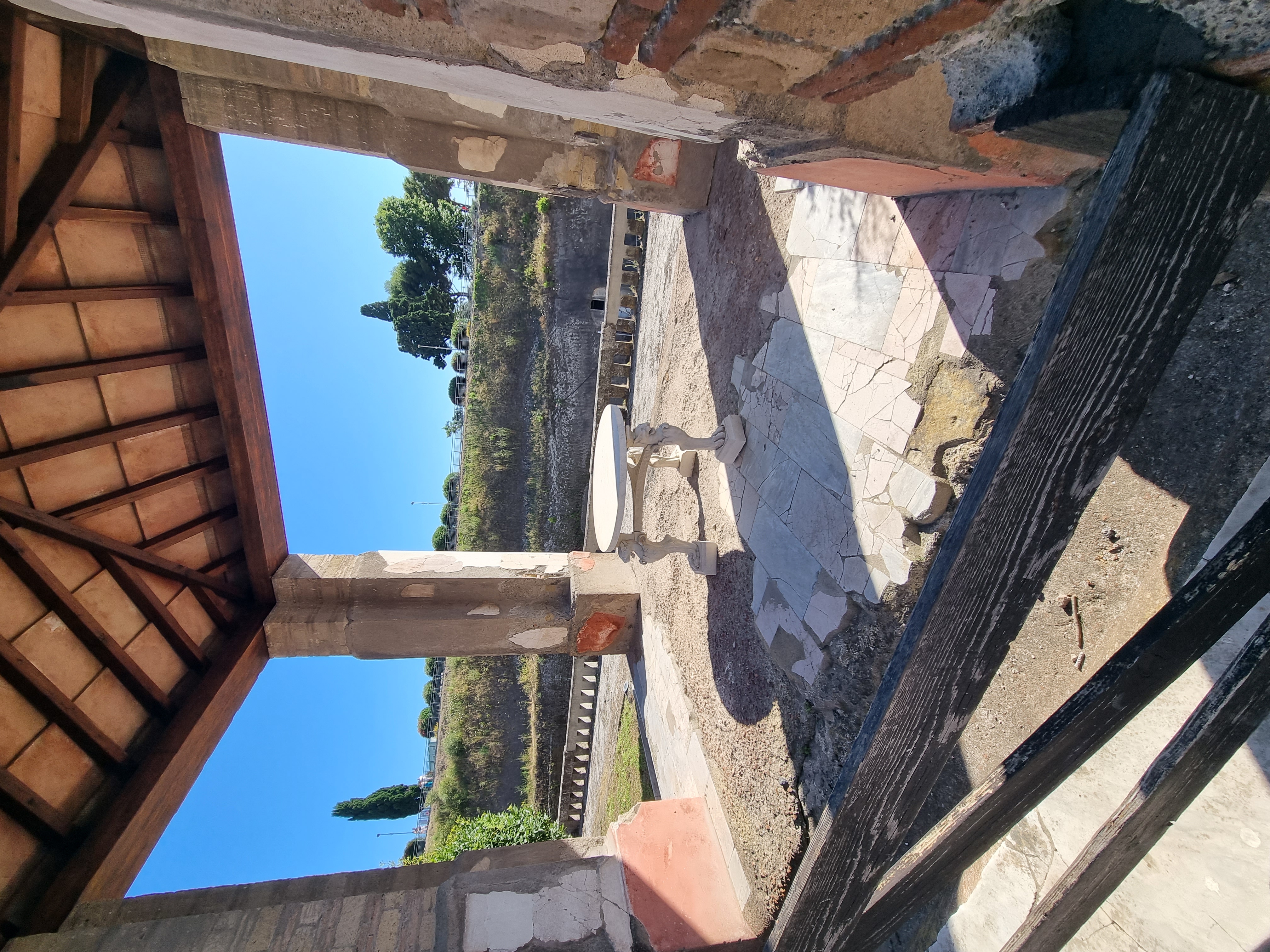
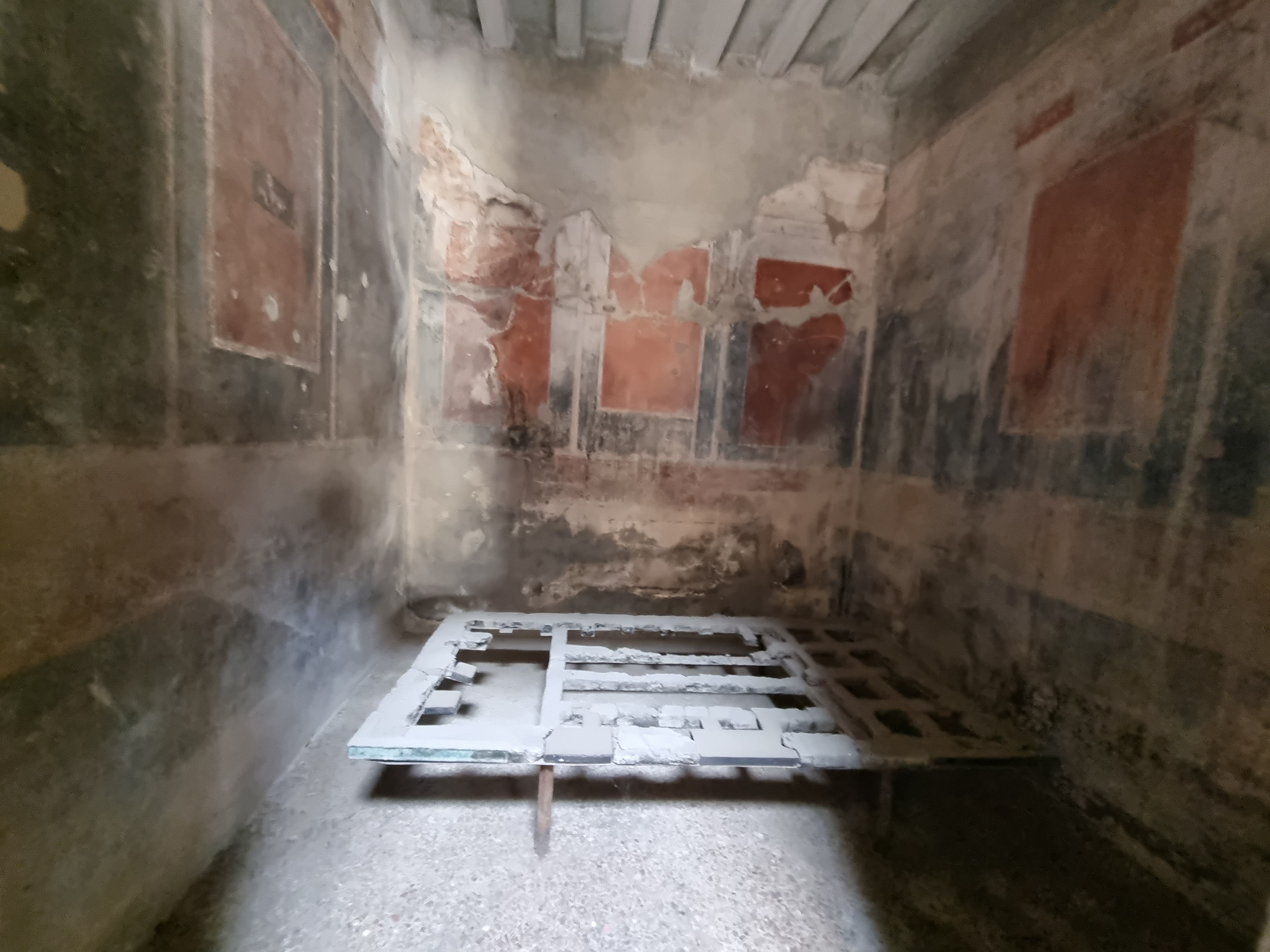
The site not only reveals monumental public buildings but also the material and spatial framework of everyday life: the inner courtyards of residential houses, imprints of upper floors, shops, workshops, street drainage, and details of urban infrastructure together paint a picture of a living, functioning settlement.
The Characteristics of Destruction and Preservation
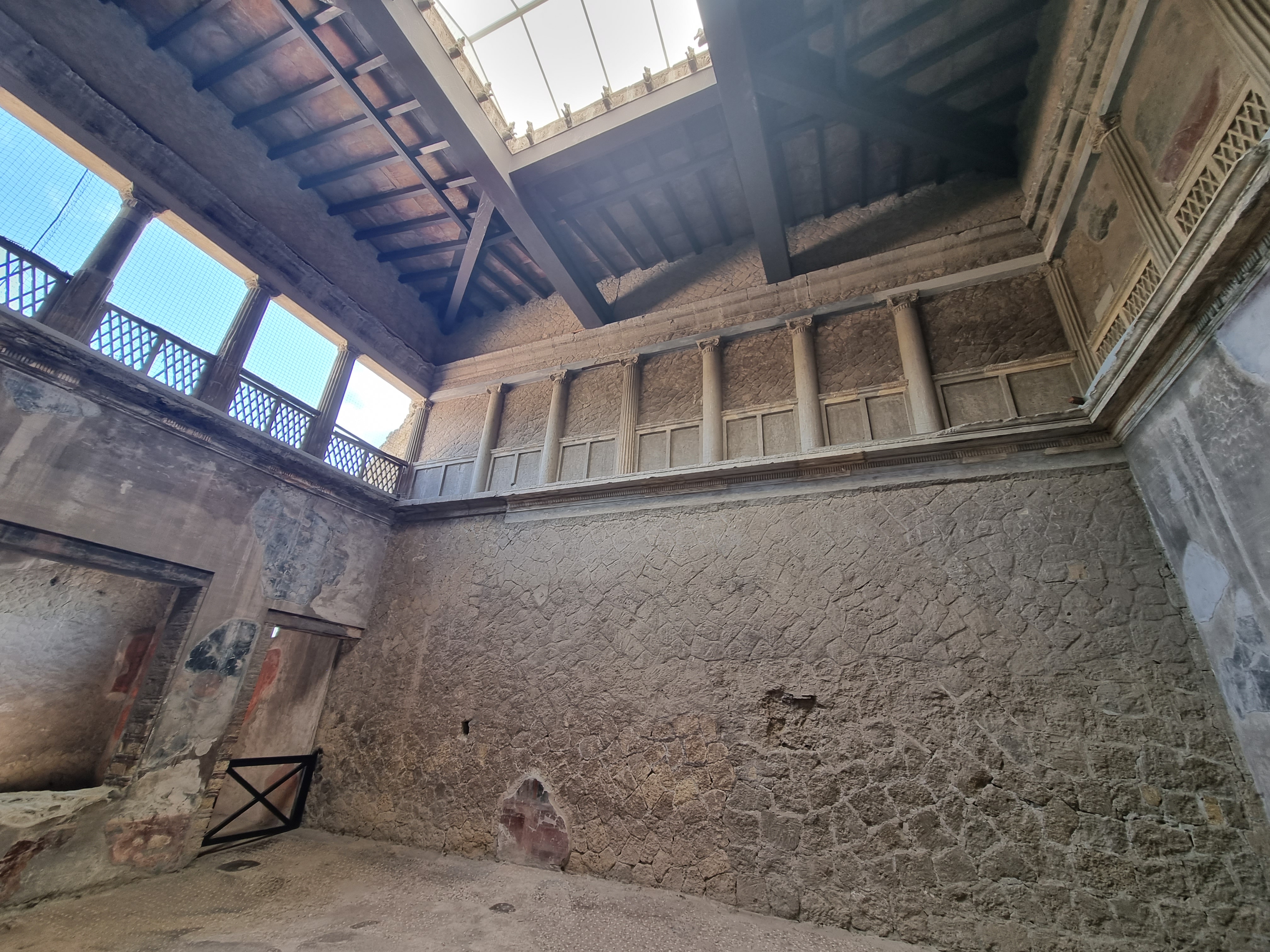
Herculaneum's preservation is explained by the physical and chemical properties of the volcanic material. The settlement was covered by thick, hot pyroclastic deposits that "sealed" spaces in many places, allowing organic materials to survive (such as wooden structures, imprints of furniture, carbonised architectural elements) that would typically perish in other environments. This characteristic enriches archaeological interpretation, as objects and structures can often be studied in their original functional contexts rather than in isolation.
The site also serves as a scientific lesson: it vividly demonstrates how a rapid, high-energy disaster transforms urban space and how a moment in a settlement's history is "frozen" in the imprint of geological processes.

Urban Structure and Architecture: What Does the Visitor See?
The walkable area in Herculaneum is compact, offering a high density of information in a shorter time. The scale of the urban details is human-sized: the proportions of houses and streets are easy to interpret, and the interiors clearly illustrate the hierarchy of Roman domestic life (reception rooms, representative spaces, servant zones, courtyards, and garden areas).
Key attractions include:
-
decorated walls, mosaics, and inner courtyards of residential houses,
-
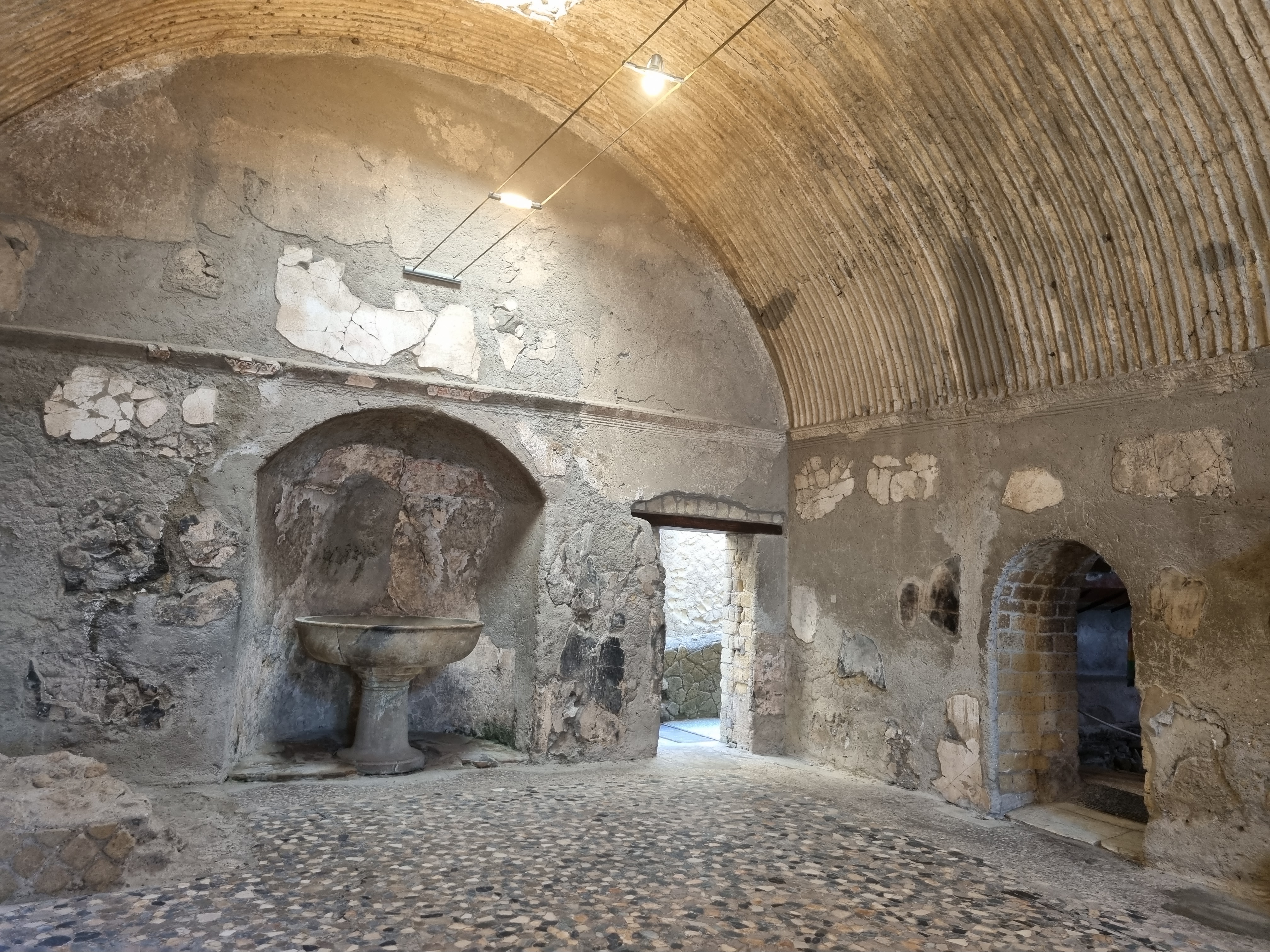
spaces related to communal and bathing culture,
-
traces of urban utilities and water usage (water supply, drainage),
-
layers of the city's relationship with the sea, reflecting historical changes in the landscape and settlement.
The value of the site lies not only in its "beautiful" ruins but also in how the logic of urban functioning becomes readable: how trade, transportation, the spatial separation of private and public life were organised, and what materials and techniques were used in construction.

Herculaneum in Scientific Education
Herculaneum is a cornerstone of archaeology and ancient history because the phenomena observed here are directly linked to the study of Roman daily life. The settlement can also be seen as a "laboratory": the mode of preservation, stratigraphic relationships, and material usage provide a complex dataset that aligns well with modern investigative methods (material analysis, micromorphology, building diagnostics, digital documentation).
From an educational perspective, it is impactful because it guides visitors to understand that heritage is not just about spectacle but interpretation: every wall fragment, plaster or mosaic piece, staircase remnant, and drainage channel is an imprint of a historical "question."
Visitor Experience and Interpretation
To fully appreciate the site, it is worth adopting a "slow reading" strategy: the true experience comes not from quantity but from understanding the details. In Herculaneum, spatial awareness (street lines, blocks, entrances) is particularly useful, as it allows visitors not just to "linger" in individual houses but to see the site within its urban context.
A scientific educational approach is well complemented by visitors progressing with questions:
-
What does a house's floor plan reveal about social status?
-
How was water usage and hygiene organised?
-
Which architectural details indicate repairs or modifications?
-
What traces did the disaster leave in the space, and what was "added" by later excavations?

Sustainability and Heritage Conservation
The sustainable management of Herculaneum is grounded in heritage conservation: the site can remain accessible in the long term only if preservation, visitor impact, and presentation are balanced. The greatest risks are usually not posed by tourism but by environmental factors (rainfall, moisture, salt crystallisation, temperature fluctuations, biological growth), making continuous monitoring, preventive maintenance, drainage control, and the protection of vulnerable surfaces and spaces crucial.
From the visitor's perspective, sustainability means "gentle use": following designated routes, avoiding touching decorated surfaces, consciously avoiding crowded periods, and maintaining disciplined behaviour befitting the site. At the same time, authentic interpretation is also a tool for heritage conservation: if the presentation clearly distinguishes between verified elements and reconstructions or assumptions, visitors not only enjoy the experience but also understand why protecting the ruins is necessary.
- editorial content -

Target group
-
Class trips
-
Families with younger children
-
Families with older children
-
Multigenerational programs
-
Friends
-
Seniors
-
Couples
Other services
Sights, programs
Parking information
- Paid parking available
Sustainability status report
The values shown here come from I-DEST's internal self-assessment system, which shows the progress of a service provider or location in various areas of sustainability. These are not rating scores, but rather informative feedback to support improvement. Food and products
 Caring for people
 Decent employment
 Pollution reduction
 Caring for the climate
 Waste reduction
 Caring for water
 Caring for nature
 Caring for culture
 Management and information