Folk House
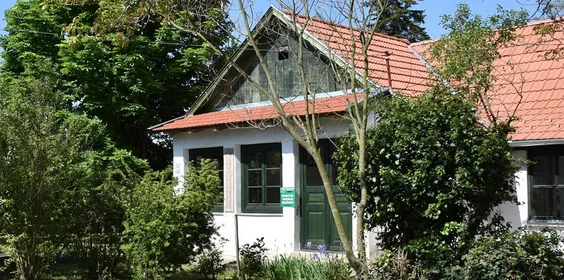
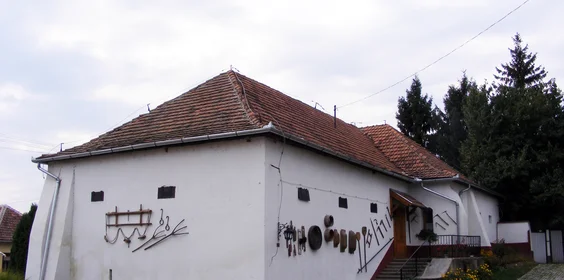
The masterpieces of folk architecture can still be found in Biharugra today. Two thatched houses, each over two hundred years old, stand in the middle and at the far end of the main street named after Queen Elisabeth. The former now functions as a folk house. The 100-square-metre building was constructed in several stages and is a typical peasant house. Initially, it was most likely a three-part building with a room, kitchen, and pantry-chamber layout. Later, a separate outbuilding was added as a stable, and subsequently, the space between the two buildings was enclosed. An external pantry was added in this section. The building is a traditional adobe-walled, thatched-roof dwelling with a rammed earth foundation. The living area features ceilings made of wooden beams, covered with clay from below and thatched with reeds on top. The roof structure, as seen from the street, is a small, hipped gable roof. Inside the house, a furnace and a built-in stove were also constructed. By 2010, the building was in a severely deteriorated condition when it was acquired by the local council. By this time, the damage was so extensive that renovation became unavoidable. During the restoration, the entire roof covering, damaged ceilings, and walls were repaired. Additionally, the façade windows and doors were restored, rainwater drainage was installed, the surroundings of the house were tidied up, and a woven wattle fence was created along the street front. As one of the oldest residential buildings in Biharugra, the locals preserve it as a historical monument and value, and it also enjoys local protection. Today, the local council presents the building as a folk house to visitors.
- Parking available
Target group
-
Class trips
-
Friends
-
Seniors
-
Families with older children
-
Families with younger children
-
Multigenerational programs
Other services
Sights, programs
Parking information
- Free outdoor parking available
Sustainability status report
The values shown here come from I-DEST's internal self-assessment system, which shows the progress of a service provider or location in various areas of sustainability. These are not rating scores, but rather informative feedback to support improvement. Food and products
 Caring for people
 Decent employment
 Pollution reduction
 Caring for the climate
 Waste reduction
 Caring for water
 Caring for nature
 Caring for culture
 Management and information