Casa de Pilatos / House of Pilate
Located in the heart of Seville, the Casa de Pilatos is one of the most unique gems of Andalusian architecture. This palace is not just a historical monument but a living example of how a building can remain relevant and sustainable for centuries amidst changing environmental and social conditions.
- Cash
- Bank card accepted
Layers of the Past: A Fusion of History and Style
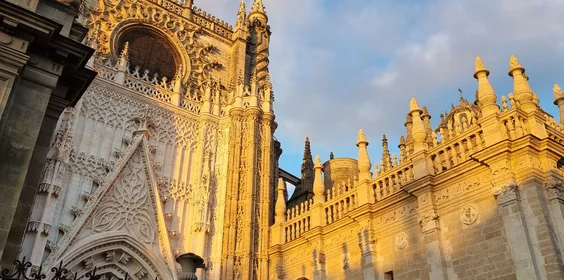
The palace, built at the end of the 15th century, served as the residence of the Dukes of Medinaceli and represents a brilliant blend of Italian Renaissance and Spanish Mudejar styles. According to local tradition, it was named because the builder, the Marquis of Tarifa, believed after his pilgrimage to Jerusalem that the distance between the house and Pontius Pilate's house mirrored the stations of the cross. The uniqueness of the building lies in its "horror vacui" aesthetic (fear of empty spaces): its walls are covered with more than 150 different patterns of vibrant azulejo tiles, forming one of the most significant collections in Europe.

Architectural Treasures: The Harmony of Mudejar and Renaissance
The central courtyard (patio) is the heart of the palace, offering a unique visual experience with its intricate stucco work and marble statues. The building's two levels – the cool lower level for summer and the sunlit upper level for winter – reflect the engineering and social awareness of the era. The gardens of Casa de Pilatos evoke the atmosphere of Mediterranean oases, where lush vegetation and water play a central role in creating a microclimate.
A Link to Sustainability: Heritage for the Future
A visit to Casa de Pilatos offers a deeper, more complex understanding of sustainability:
-
Heritage conservation as resource management: The maintenance of the building under the care of the Fundación Medinaceli is a prime example of "adaptive reuse." Instead of consuming new resources for urban development, preserving and repurposing the existing historical fabric is a strategy with the smallest ecological footprint.
-
Natural cooling technologies: The passive techniques used in the palace's construction – thick stone walls, air circulation in the courtyards, shading, and evaporative cooling from wells – remain more effective than many modern, energy-intensive solutions. These "old-new" methods are crucial for adapting to climate change.
-
Cultural sustainability: Preserving local identity and keeping traditional crafts (such as tile painting) alive ensures that tourism supports rather than undermines the cultural capital of the local community.
Casa de Pilatos is not just a piece of our past but also an inspiration for a sustainable future, where beauty and practicality have been in balance for centuries.
- editorial content -

Target group
-
Families with older children
-
Multigenerational programs
-
Friends
-
Seniors
-
Couples