Galleria Vittorio Emanuele II
The Galleria Vittorio Emanuele II is one of Milan's most renowned architectural and urban icons. The covered passage between Piazza del Duomo and the Scala opera house is not just a shopping arcade but Milan's historic 'living room': a prestigious meeting place, urban promenade, luxury shopping hub, and architectural attraction all in one. Even the official city tourism website, YesMilano, describes it as Milan's 'grand drawing room', the city's elegant reception area.
Historical Background
The Galleria is one of the most significant symbols of 19th-century Milan's modernisation. Designed by architect Giuseppe Mengoni, its construction took place between 1865 and 1877, and it was named after Victor Emmanuel II, the first ruler of the unified Kingdom of Italy.
The creation of the Galleria is closely tied to the urban planning and national representation efforts of the Italian unification era. The aim was to establish a monumental, modern, covered public space that would connect Milan's two key symbolic landmarks: the Duomo, the religious and historical centre, and the Teatro alla Scala, one of Europe's most significant opera institutions.
The construction of the Galleria is also marked by tragedy: Giuseppe Mengoni did not live to see his work completed. The architect fell from the scaffolding the day before its inauguration in 1877.
Architectural Significance

The Galleria Vittorio Emanuele II is one of the finest European examples of 19th-century iron and glass architecture. Its cross-shaped layout features arcades covered by a glass roof, intersecting at a central octagonal space. The grand glass dome, cast iron structures, neo-Renaissance façades, mosaic floors, and ornate shopfronts together create a spatial experience that evokes the elegance of historic palaces while reflecting the dynamism of a modern metropolis.
What makes the Galleria unique is its function as a covered street. It is not a closed shopping mall in the modern sense but a public urban passage integrated into the city's life. The building houses luxury shops, historic cafés, restaurants, and cultural landmarks, but the most significant experience is the space itself: the light, proportions, materials, and the constant urban movement.
Among the floor mosaics, the depiction of the bull of Turin is particularly famous. According to tradition, spinning on the bull's image on one's heel brings good luck, although this popular tourist practice has significantly worn down the mosaic. In May 2026, the bull mosaic required another restoration due to the damage caused by continuous use.
What to See
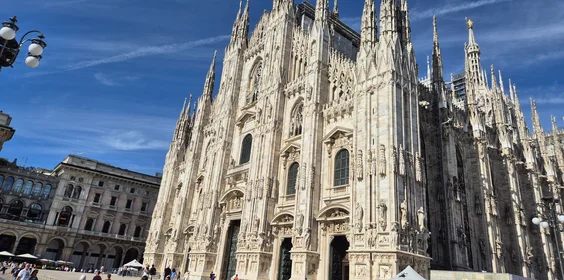
The main attraction of the Galleria is the architectural space itself. It's worth strolling slowly from the Duomo Square towards the Scala and then looking back along the axis of the Galleria: this perspective truly highlights how the building unites Milan's two iconic urban landmarks.
Special attention should be paid to the central octagonal space, the glass dome, the mosaic floors, the heraldic symbols, and the intricate details of the façades. The Galleria is not only a place for shopping but also for architectural observation: it is an excellent example of how 19th-century technological innovations — the use of glass and iron — became tools for urban representation.
The historic cafés and restaurants are also integral to the Galleria's character. These are not merely dining establishments but historical venues of Milanese bourgeois life, commerce, and social culture. Visitors should not only focus on the luxury brand displays but also observe the inscriptions, floor decorations, proportions of the Galleria, and its role within the urban fabric.

Visitor Information
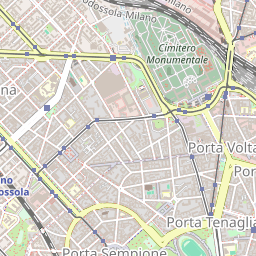
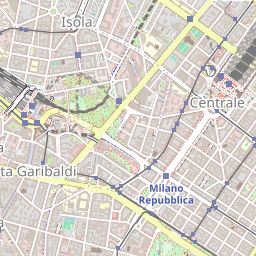
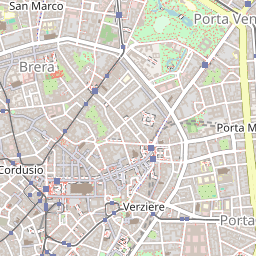
The Galleria Vittorio Emanuele II is located in Milan's historic centre, right next to the Duomo Square. As it functions as a covered, accessible public space, visiting it does not require an entrance fee. However, the surrounding shops, restaurants, and any special visiting opportunities may have their own opening hours and conditions.
The Galleria is easily accessible by metro: the Duomo station is located nearby. It can also be conveniently included in a shorter city walking route: Duomo – Galleria – Scala – Brera, or Duomo – Galleria – Teatro alla Scala – Sforza Castle.
A visit can take as little as 20–30 minutes if one simply walks through, but those with an interest in architecture, photography, or urban history may want to spend more time here. The busiest times are usually during the day and early evening, especially on weekends and during holiday periods. For a quieter experience, early morning or late evening visits are recommended.
Sustainability and Heritage Preservation
Three aspects are particularly important in the sustainability of the Galleria: heritage preservation, pedestrian urban mobility, and responsible visitor behaviour.
From a heritage preservation perspective, the Galleria is a sensitive historic space. The mosaic floors, glass and iron structures, façades, and historic shopfronts require constant maintenance. The regular wear of the bull mosaic clearly demonstrates how popular tourist practices can impose direct physical strain on heritage elements. Therefore, responsible visiting is not an abstract concept here: protecting the heritage surfaces, avoiding excessive physical strain, and respecting the space are concrete sustainability issues.
At the same time, the Galleria can serve as a positive example of sustainable urban tourism. Its central location, pedestrian accessibility, and excellent connection to public transport make it easy to visit without a car. The Duomo, Scala, Brera district, and other city centre attractions can be explored on foot from here, allowing visitors to discover Milan's historic centre with minimal environmental impact.
Managing visitor pressure is also important from a sustainable tourism perspective. The Galleria is one of the city's most photographed and busiest spots, so overcrowding can be mitigated through conscious timing, alternative route suggestions, and interpretations that present the site not just as a quick photo opportunity but as a place of historical and architectural value.
- Editorial Content -
Target group
-
Families with younger children
-
Families with older children
-
Multigenerational programs
-
Friends
-
Seniors
-
Couples