Sforza Castle
The Sforza Castle — in Italian, Castello Sforzesco — is one of Milan's most important historical buildings and cultural centres. Located in the heart of the city, it is within walking distance of the Piazza del Duomo and directly connected to the green expanse of Parco Sempione. Today, it is not only a stunning Renaissance fortress but also one of Milan's most significant museum complexes.
- Cash
- Bank card accepted
Historical Background
The history of the castle dates back to the era of the Visconti family. The precursor to the current structure was a 14th-century fortress, which was later rebuilt in the 15th century by Francesco Sforza, Duke of Milan. At that time, the castle became one of the most important symbols of the Sforza dynasty's power, serving as a military fortress, ducal residence, and a centre for representation.
During the Sforza era, Milan was one of Europe's major political and artistic centres. The castle was not only a military stronghold but also a venue for courtly culture, art, and scientific inquiry. Among the Renaissance figures associated with the city, Leonardo da Vinci stands out, having worked at the court of Ludovico il Moro and leaving behind a significant artistic legacy linked to the castle.
In later centuries, the castle's fate changed multiple times. Under Spanish, Austrian, and French rule, it primarily served military purposes and was transformed into one of Europe's largest fortified complexes during the 16th and 17th centuries. By the late 19th century, debates arose over whether to demolish or preserve it. Ultimately, a large-scale restoration led by architect Luca Beltrami took place between 1891 and 1905, elevating the castle to a central element of Milan's historical identity.

Architectural Significance
The castle is an impressive, square-shaped fortress with vast courtyards, towers, bastions, and gates. Its most iconic feature is the Torre del Filarete, located at the centre of the main façade. The tower's current form is the result of early 20th-century reconstruction, evoking the symbolism of medieval-Renaissance urban power.
What makes the castle unique is its combination of the austerity of military architecture with the elegance of courtly representation. Its exterior conveys strength, protection, and authority, while its inner courtyards and museum spaces lead visitors into the world of art, collections, and urban memory.

What to See
Today, the Sforza Castle houses several city museums and collections. A single museum ticket grants access to multiple exhibitions, making the castle an excellent choice for those who want to explore Milan's history, art, and material culture in one place. According to official information, the castle's museums are open from Tuesday to Sunday, 10:00–17:30, with the last entry typically around 16:30; Mondays are museum closing days.
Highlights include the Museo d’Arte Antica, or the Museum of Ancient and Medieval Art, which features sculptures, tombs, weapons, and Renaissance artefacts. Of particular importance is the Rondanini Pietà, Michelangelo's final, unfinished sculpture, housed in a dedicated museum space. This work is especially poignant as it conveys the dramatic experience of mortality, faith, and human fragility, rather than the idealised Renaissance form.
The castle also hosts the Pinacoteca, showcasing works by Lombard, Venetian, and other Italian masters; the Museum of Musical Instruments; collections of decorative arts and furniture; as well as archaeological and graphic collections. The museum content spans multiple eras, presenting the long cultural development of Milan and Northern Italy.
Special attention should be given to the freely accessible courtyards of the castle. The inner courtyards, gates, walls, and passageways provide a strong historical experience even for those with limited time. The Parco Sempione, which begins behind the castle, offers opportunities for urban walks, relaxation, or a route towards the Arco della Pace.

Visitor Information
The castle courtyards are generally free to visit, but tickets are required for the museums. According to YesMilano, the castle is open daily from 7:00–19:30, while the museums are open from Tuesday to Sunday, 10:00–17:30; the museums are closed on Mondays, January 1st, May 1st, and December 25th.
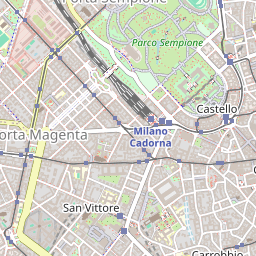
The site is easily accessible by public transport: nearby metro stations include Cairoli, Cadorna, and Lanza, and several tram and bus lines stop in the vicinity of the castle. This is particularly important for sustainable city visits, as the castle can be easily included in a car-free Milan itinerary.
Allow at least 1.5–2 hours for a visit, but a more detailed exploration of the museums could take up to half a day. Those wishing to include the Rondanini Pietà, the main museum collections, and a walk through Parco Sempione should plan a slower, thematic visit.

Sustainability and Heritage Preservation
The sustainability of the Sforza Castle is primarily understood through the preservation of cultural heritage, community access, and its connection to urban green spaces. Maintaining a monument of this size requires continuous restoration, conservation, professional documentation, and responsible visitor behaviour.
From a sustainable tourism perspective, one of the castle's greatest assets is its central location, which is easily accessible on foot and by public transport. Natural urban walking routes connect it to the Duomo, the Brera district, Cadorna station, the Triennale, and Parco Sempione. This allows visitors to explore one of Milan's most important cultural axes with minimal environmental impact.
The relationship between the castle and the adjacent Parco Sempione is particularly significant: the historical heritage and urban green space complement each other. As a result, a visit can be both a museum experience and an opportunity for urban recreation. This fits well with the logic of sustainable city tourism: visitors not only quickly consume a single attraction but spend time in the urban space, move around on foot, and reduce the strain on city centre transport.
The Sforza Castle is one of the best places in Milan to understand the city not only as a fashion and design capital but also as a historical centre of power. Whether arriving on foot or by metro, explore the courtyards, visit the museums, take time to appreciate Michelangelo's Rondanini Pietà, and continue your visit in the green spaces of Parco Sempione. This way, the castle becomes not just a sight to see but a complete urban experience.
Target group
-
Class trips
-
Families with older children
-
Multigenerational programs
-
Friends
-
Seniors
-
Couples