Félixfürdő
Félixfürdő hévízkultúrája több mint nyolcszáz éves múltra tekint vissza. A legkorábbi írásos emlék egy 1221-ből származó vatikáni oklevél (Diploma of the Vatican), amely Termae Varadienses (Váradi Fürdők) néven említi a Nagyváradi Vár közelében fekvő meleg vizes forrásokat. A terület későbbi virágzása és intézményesülése a 18. század elejére tehető: Helcher Félix szerzetes, a váradelőhegyi prépostság elöljárója ekkor kezdte el a mocsaras forrásvidék rendbetételét és az első fürdőházak kiépítését – az ő nevét őrzi a település mindmáig. A helyszín logikája azóta sem változott: a környező tölgyerdők természetes szélvédelmet biztosítanak, sajátos, ózonban dús mikroklímát teremtve.
A fürdőhely a 20. század első felében, egykori képeslapokon


Évszázados víz: Utazás a föld mélyén
A fürdőtelep működésének alapja a föld mélyéből 40–49 °C-os hőmérsékleten feltörő gyógyvíz. Amikor valaki megmártózik a félixfürdői medencékben, szó szerint „évszázados vízben” fürdik. A hidrológiai vizsgálatok kimutatták, hogy a környező hegyekben leeső csapadéknak 200–500 évre van szüksége, amíg a karsztos kőzeteken átszivárogva eléri az 1000–2000 méteres mélységet, felmelegszik, majd a törésvonalak mentén újra a felszínre tör. Ez az akratoterma víz ezalatt a hosszú geológiai utazás alatt válik oligomineralizálttá, valamint szulfátokban, kalciumban és magnéziumban gazdaggá.
Jégkorszaki túlélők és Ady Endre lótuszvirágai
A termálvíz állandó, magas hőfoka tette lehetővé azt a botanikai ritkaságot is, amely a település védjegyévé vált. A hévízi tündérrózsa (Nymphaea lotus var. thermalis) egy valódi jégkorszaki túlélő, amely a meleg forrásoknak köszönhetően maradt fenn a Kárpát-medencében.
Ez a szubtrópusi növényritkaság nemcsak a biológusokat, hanem a váradi irodalmi életet is megihlette. Ady Endre nagyváradi újságíróskodása idején gyakori vendég volt a környék fürdőiben, és a lótusznak hívott virág mély benyomást tett rá. Pusztul a lótusz (1906), majd később Lótusz című versében is megemlékezett a virágról, és már a 20. század elején aggódva hívta fel a figyelmet e törékeny természeti kincs megóvására. A tündérrózsa jelenléte a tavak felszínén így ma már nem pusztán esztétikai díszlet, hanem a helyi irodalmi és természeti örökség szerves része.
Gyógyászat és az Apolló strand szerepe
Félixfürdő infrastruktúrája két fő pillérre épül: az orvosi rehabilitációra és a szabadidős fürdőzésre. A helyi Medical SPA központokban a termálvizet, az iszappakolásokat és az elektroterápiát elsősorban mozgásszervi megbetegedések, gerincproblémák és műtét utáni rehabilitáció kezelésére használják.
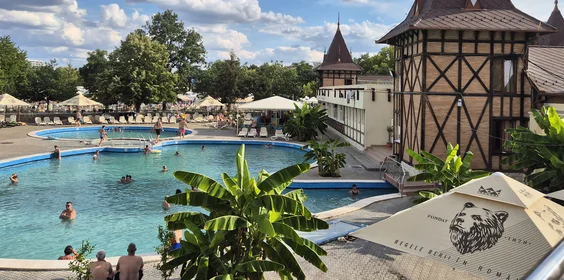
A település központi eleme a felújított Apolló strand (Ștrandul Apollo). Ez a régió legrégebbi szabadtéri fürdőkomplexuma, amely ma már modern élménymedencékkel, csúszdarendszerrel és hidromasszázs-egységekkel üzemel. Mivel a forrásvíz hőmérséklete télen sem csökken jelentősen, az Apolló strand szabadtéri medencéi az év 365 napján működnek.
Erőforrás-kezelés és fenntarthatóság
A termálvíz nem kimeríthetetlen készlet. A település fenntarthatósági stratégiája a vízgyűjtő rétegek védelmére és a kitermelés szigorú szabályozására épül:
-
Hozamkontroll: A kútból kinyert víz mennyiségét korlátozzák, hogy a réteg nyomása és a természetes források stabilitása megmaradjon.
-
Élőhely-megőrzés: A tündérrózsáknak otthont adó tavak vízszintjét és vegyi összetételét folyamatosan monitorozzák.
-
Energetikai hasznosítás: A medencékből kilépő, úgynevezett elhasznált termálvíz maradékhőjét hőszivattyúkkal kinyerik, és a környező épületek fűtésére, valamint használati meleg víz előállítására használják fel.
- Szerlkesztőségi tartalom -
Getting there and arrival
- Bike
- Electric bicycle
- Car
- Motorcycle
Transport options in the destination
- Walk
- Bike
- Public bus transportation
- Motorcycle
- Car
Sights, programs
What will you find here?
-
Sights