Locations and Attractions
253 results
Sort:
-
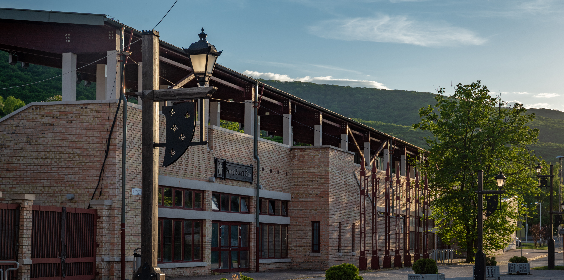
Diósgyőr Paper Mill Museum of Papermaking and Special Collection Discover the more than two-hundred-year history of the Diósgyőr Paper Mill, the craft of papermaking, and its traditions! Magyarország, 3535 Miskolc, Hegyalja utca 203
-
Dobozi Reformed Church Located in the centre of Doboz village, in the middle of Kossuth Square, stands the Reformed Church, rich in historical and cultural significance. It was built between 1794 and 1798 during the ministry of Sámuel Kállai M. Magyarország, 5624 Doboz, Kossuth tér 1
-
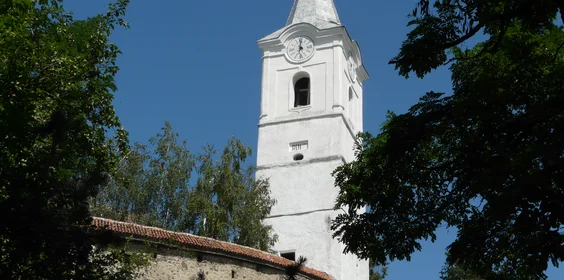
Downtown Lutheran Church Visit the Lutheran church located in the Luther Courtyard, easily found in the city centre with its towers reaching a height of 60 metres! Magyarország, 3525 Miskolc, Hunyadi János utca 8
-
Ellipsum Ellipsum, the new bath complex in Miskolctapolca, attracts visitors with its distinctive ellipsoid-shaped halls. Hungary, 3519 Miskolc, Miskolctapolca, Aradi sétány 1
-
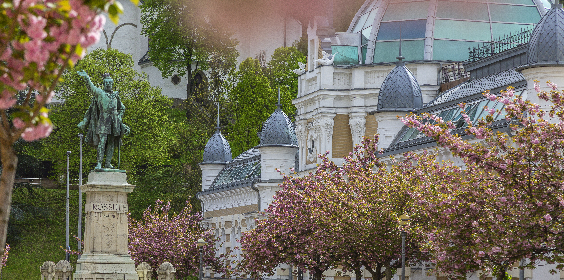
Erzsébet Square Erzsébet Square, though the smallest square in Miskolc, is one of its most beautiful, with all its buildings constructed in an eclectic style during the Austro-Hungarian Monarchy. Hungary, 3530 Miskolc, Erzsébet tér 2-4
-
Exaltation of the Holy Cross Catholic Church and Crypt Behind the former castle, surrounded by a branch of the Dead Black Körös River, lies a 3.7-hectare castle park, designed by the Wenckheim family in the 1880s. At the highest point of the park stands the neo-Romanesque-style Holy Cross Chapel and Crypt, often referred to as the 'jewel box' of the area. In 1902, Count Dénes built the neo-Romanesque patronal church and the round cemetery chapel, the crypt, based on plans by Viktor Siedek, a Viennese architect. The chapel cost 250,000 crowns. The foundation of the church was dug out in just one week in 1857 by local labourers from Doboz. The buildings were consecrated on 7 June 1902 by Bishop Lőrinc Schlauch of Várad. According to contemporary accounts, at the Gerla bridge, a hundred horsemen welcomed the bishop performing the consecration, escorting him to the church entrance. For the celebratory lunch following the consecration, 800 meal tickets were distributed among the construction workers. The interior is richly decorated, with every column and staircase in the church made of marble. The colourful windows, the three altarpieces, and the ceiling paintings, featuring mosaics covered with 24-carat gold leaf, were created by Tyrolean artists. The church and its associated family crypt can be visited by prior arrangement. Magyarország, 5624 Doboz, Sport utca
-
Expano Expano is an interactive experience park by Lake Soboško, offering visitors a modern and engaging way to discover Pomurje, its nature, culture, traditions, and tourist attractions. Visitors explore the region through various multimedia content, games, and interactive displays. Slovenia, 9000 Murska Sobota, Bakovska ulica 41
-
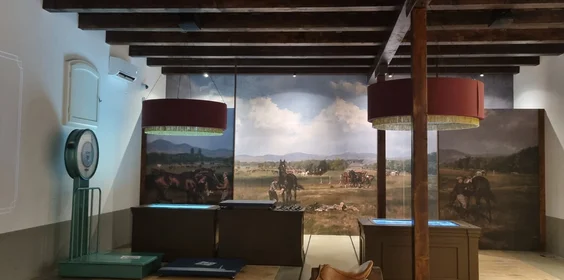
Fenékpusztai Estate The Fenékpusztai Estate is an experience and cultural centre established on the site of a historically significant 19th-century Festetics stud farm, located just 6 km from Keszthely. The estate was purchased by the Festetics family in 1739 and soon became one of the region's prominent centres for Hungarian horse breeding and equestrian sports. The estate played a key role in the development of domestic racehorse breeding, and the horses bred here gained international fame during the Austro-Hungarian Monarchy. Magyarország, 8360 Keszthely, Fenékpuszta 1
-
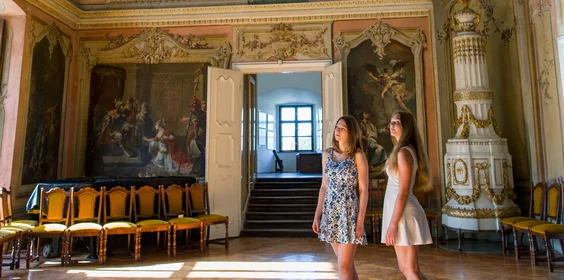
Nádasdy Ferenc Museum The Nádasdy Castle in Sárvár is one of Hungary's historic monuments that has survived the storms of centuries in perfect condition. The castle's and museum's most beautiful room is the ceremonial hall built by Ferenc III Nádasdy. The ceiling frescoes, completed in 1653, depict the battles fought between 1591 and 1602 by Ferenc II Nádasdy, the famous 'Black Bey', a hero of the wars against the Turks. The museum's decorative arts collection is also diverse. The hussar history exhibition is Europe's only standalone hussar exhibition open to visitors. The map history exhibition features original map engravings from the 16th to 18th centuries, depicting Hungary and its surroundings. Take the time to discover the treasures of the museum. Step through the gateway to timeless secrets! It's worth it. Magyarország, 9600 Sárvár, Várkerület utca 1
-
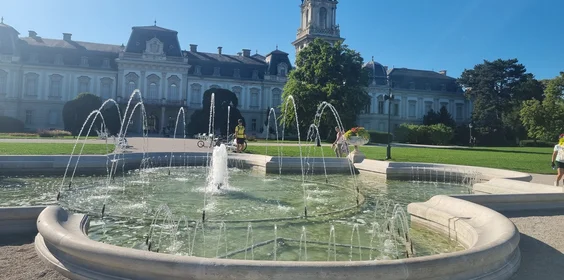
Festetics Palace The Festetics Palace in Keszthely is not only one of Hungary's most visited monuments but also an intellectual hub that has symbolised progress, education, and a love for nature for centuries. For the conscious traveller, this destination represents the meeting point of historical grandeur and exemplary heritage preservation. Magyarország, 8360 Keszthely, Kastély utca 1
-
Field of Knightly Tournaments Fascination with the medieval era captivates people of all ages, whether through literature, films, or modern video games. Hungary, 3534 Miskolc, Diósgyőr, Tapolcarét
-
Fisherman's Bastion If there's one place in Budapest you can never tire of, it's the Fisherman's Bastion. Whether you're passing by for the hundredth time or seeing it for the first, the intricate stone towers and the panoramic view of the Danube never fail to take your breath away. But how did this medieval fortress become the capital's most photographed spot, and what can we do to ensure that our grandchildren can marvel at it just as much? Magyarország, 1014 Budapest, I. kerület
-
Fontana Spa & Balneo Borsec Románia, 535300 Borsec, Strada Carpați 101a
-
Forestry History Collection Explore the collection showcasing the history of forestry and the forest railway! Magyarország, 3517 Miskolc, Lillafüred
-
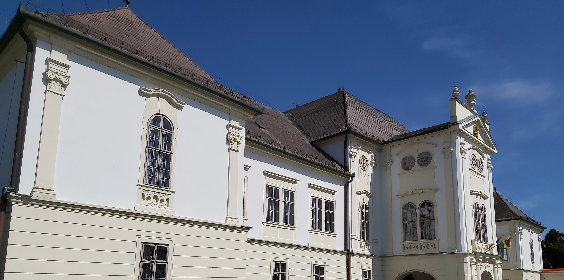
Forgách-Liphtay Castle Museum Nestled among the hills of the Cserhát region, the town of Szécsény boasts its most prominent architectural and historical landmark: the Forgách Castle. This impressive Baroque-style complex is not only a defining jewel of the Nógrád landscape but also a silent witness to numerous pivotal events in Hungarian history. Today, the castle and its surroundings exemplify the perfect symbiosis of cultural heritage preservation, active museum life, and sustainable rural development, making it a prime destination for conscious travellers. Magyarország, 3170 Szécsény, Ady Endre út 7
-
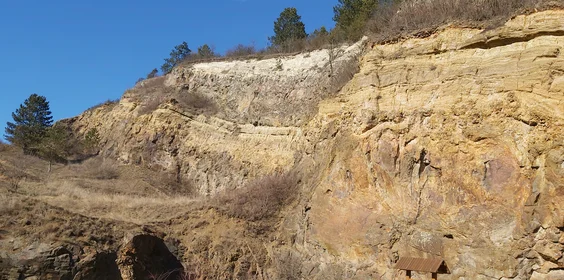
Former Quarry of Sámsonháza, Geological Interpretive Site The former quarry located on the southern peak of Vár Hill, near the village of Sámsonháza, is one of the outstanding geotourism sites of the Novohrad–Nógrád UNESCO Global Geopark.
-
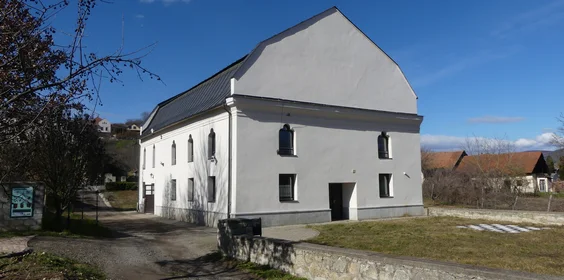
Former Synagogue According to the census of 1723-24, there were already 7 Jewish families living in Bodrogkeresztúr, and their number increased steadily during the 18th century. The strengthening of the community and the religious life is shown by the fact that the first rabbi of the Jewish community of Pest, Israel Wahrmann, was the rabbi of Bodrogkeresztúr prior to 1765, and there are records from the same year that the Bodrogkeresztúr fair was visited by Jewish merchants from Pest county. A few decades later, in 1786, 256 Jewish inhabitants were recorded in the settlement, in 65 households. Hungary, 3916 Bodrogkeresztúr, Kossuth utca 30
-
Fortified Church of Cârța On a small hill, on a rise of Madics Hill, stands the Fortified Church of Cârța (in Romanian, Cârța), dedicated to the Assumption of the Virgin Mary. The Gothic church, built in the 14th–15th centuries, is surrounded by 8–10 metre high stone walls and bastions, which served as protection against Turkish and Tatar attacks. The church symbolises the shared strength and faith of the four surrounding villages – it was a joint creation of the residents of Cârța, Jenőfalva, Dánfalva, and Madaras. The gate tower and the four-storey bell tower were built in the 15th–16th centuries and later heightened. The church interior was later remodelled in Baroque style, but the Gothic sanctuary has been preserved. Románia, 537035 Ineu, DJ125 10
-
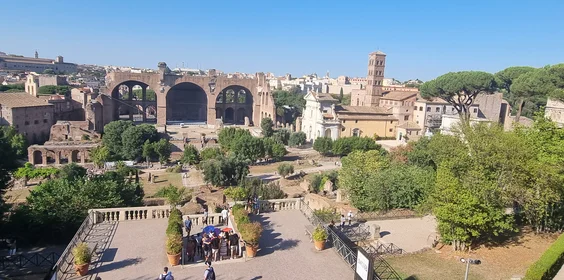
Forum Romanum The Forum Romanum is not just a collection of ruins; it is the very space where the fate of the Roman Empire was decided. For centuries, this valley was the political, religious, and commercial hub of Europe and the Mediterranean. Visiting the Forum offers a profound historical immersion, where every stone tells a story of laws, triumphs, or downfalls. Olaszország, 00186 Róma
-
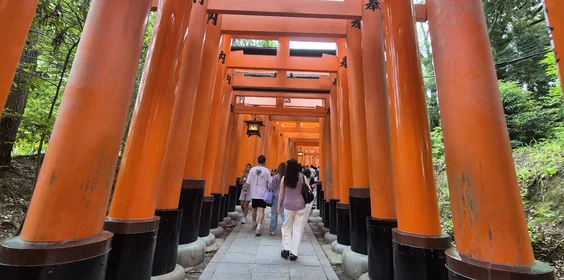
Fushimi Inari-taisha Located in the southern part of Kyoto, at the foot of Mount Inari, Fushimi Inari-taisha is one of Japan's most ancient, spectacular, and spiritually significant shrine complexes. The mysterious tunnels formed by thousands of vibrant orange-vermilion torii gates and the stone statues guarding the shrine grounds offer an unparalleled experience. This site is not only one of the most important centres of the Japanese Shinto religion but also a key testing ground for modern tourism, where millennia-old traditions meet the challenges of sustainability. Japán, 612-0882 Kyoto, Fukakusa Yabunouchichō
-
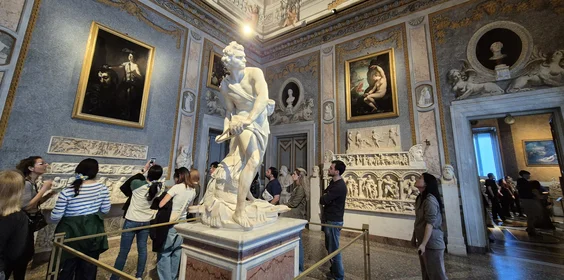
Galleria Borghese The gallery located in the heart of Villa Borghese park is not just a museum but a "jewel box of art collecting". Cardinal Scipione Borghese, one of the greatest art patrons (and notorious art thieves) of the 17th century, built this villa to provide a worthy home for his priceless collection. For I-DEST.com readers, this destination represents the pinnacle of quality tourism, where visitor numbers are strictly limited to protect the artworks. Olaszország, 00197 Roma, Piazzale Scipione Borghese 5
-
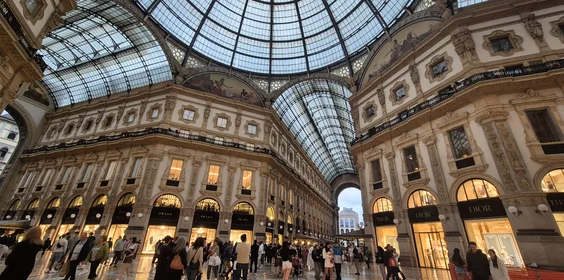
Galleria Vittorio Emanuele II The Galleria Vittorio Emanuele II is one of Milan's most renowned architectural and urban icons. The covered passage between Piazza del Duomo and the Scala opera house is not just a shopping arcade but Milan's historic 'living room': a prestigious meeting place, urban promenade, luxury shopping hub, and architectural attraction all in one. Even the official city tourism website, YesMilano, describes it as Milan's 'grand drawing room', the city's elegant reception area. Olaszország, 20123 Milánó
-
Gallery The "Miskolc Anno" exhibition at the Herman Ottó Museum uniquely combines art and history. Hungary, Miskolc
-
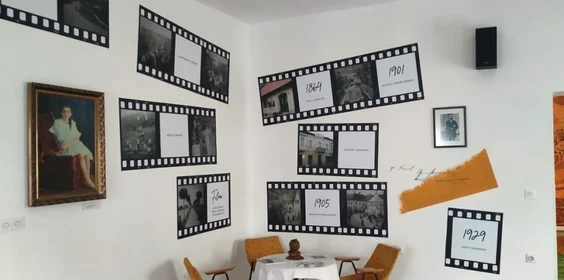
General Library Ljutomer, Museum Department At the museum, visitors can enjoy a self-guided or guided tour of three permanent collections: the collection of the First Slovenian Tabor, the collection dedicated to Dr Karol Grossmann, and the collection on the general history of Ljutomer. Through diverse museum exhibits, visitors learn about significant events, personalities, and the development of the town and the wider Prlekija region. A unique feature of the guided tour is the presentation of the first three Slovenian film recordings by Dr Karol Grossmann. The museum offers an engaging cultural and historical experience for all generations. Slovenia, 9240 Ljutomer, Glavni trg 1