Chain Bridge
The Széchenyi Chain Bridge in Budapest is not only an iconic symbol of the capital but also an enduring monument to Hungarian modernisation and unity.
A vision that united the nation
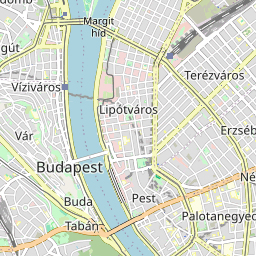
In the early 19th century, Buda and Pest were still two separate cities, divided in winter by the frozen Danube and in spring by its drifting ice. Count István Széchenyi decided to build a permanent bridge after being forced to wait an entire week in December 1820 to cross the river for his father’s funeral due to flooding and ice flows. This personal tragedy sparked one of the greatest endeavours of the Reform Era. When the bridge, designed by William Tierney Clark and constructed by Adam Clark, was inaugurated in 1849, it not only physically connected the two parts of the city but also became a symbol of shared responsibility, as nobles had to pay the same toll to cross as commoners.

Legends and the mystery of the silent lions

The Chain Bridge is surrounded by numerous urban legends, the most famous of which involves the stone lions sculpted by János Marschalkó. According to the story, the sculptor forgot to carve the lions’ tongues, and when an apprentice pointed this out during the inauguration ceremony, Marschalkó, overcome with shame, leapt into the Danube. In reality, Marschalkó’s work was anatomically accurate: the lions’ tongues rest flat against the floor of their mouths, hidden behind their teeth, just as seen in resting big cats in nature. Since the statues stand on high pedestals, the viewing angle from the street obscures the tongues behind the stone teeth. The artist lived to a respectable old age, and the bridge itself has weathered the harshest storms of history; although it was blown up by retreating German forces during World War II, it was rebuilt through national unity and reopened in 1949, on the centenary of its original construction.

A green transformation above the Danube
The most recent comprehensive renovation of the Chain Bridge was not only about preserving its architectural values but also about creating future-proof, sustainable urban transport. During the refurbishment, the bridge was equipped with modern, energy-efficient LED lighting, significantly reducing the capital’s light pollution and energy consumption. However, the most significant step towards sustainability was the transformation of traffic regulations: since its reopening, the bridge has been free from private vehicle traffic and is now exclusively used by public transport buses, taxis, cyclists, and pedestrians. This measure has drastically reduced harmful emissions and noise pollution in the city centre.
The responsible traveller’s experience
Today, the Chain Bridge is the perfect destination for slow, experience-based tourism. Visitors can walk between Buda and Pest in a car-free, clean environment while enjoying stunning views of the Castle District and the Parliament. For sustainable travellers, the bridge is not merely a crossing point but a model example of environmentally conscious urban mobility, where historical heritage and a green future harmoniously come together.
- Editorial content -
Target group
-
Class trips
-
Families with younger children
-
Families with older children
-
Multigenerational programs
-
Friends
-
Seniors
-
Couples