Mád Synagogue
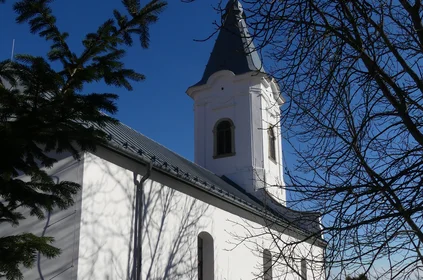
Tokaj-Hegyalja is not only renowned for its world-famous wines and unique cultural landscape but also for its rich religious and cultural diversity. One of the most outstanding and internationally recognised monuments of the wine region's architectural and intellectual heritage is the Mád Synagogue. This stunning neoclassical monument, built in the copf style, serves as a fitting tribute to the once-thriving Jewish community of the region, their economic role, and their intellectual centre, while also being a key site for cultural remembrance and responsible tourism for today's visitors.
- Free outdoor parking available
- Free bus parking available
The History of Judaism in the Tokaj-Hegyalja Wine Region
The presence of Jewish communities became significant in Tokaj-Hegyalja from the early 18th century when immigrants from Poland and Galicia settled in the region. The local Jewish community played a key role in the international trade of Tokaj wine, the technological advancement of winemaking, and the flourishing of wineries and vineyards. Mád held a central position in this network, becoming one of the most important economic hubs of the wine region through its fairs and trade connections. The community also excelled in Orthodox religious life and rabbinical education, with the Mád yeshiva being one of the most renowned educational centres in the region. The tragedy of the 20th century, the Holocaust, sadly almost entirely destroyed this thriving community, but their material and intellectual heritage remains an integral part of the wine region's identity today.

The History and Highlights of the Mád Synagogue
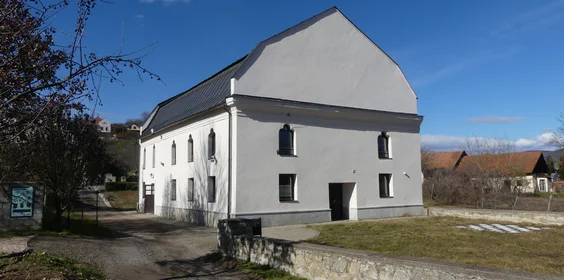
Consecrated in 1795, the Mád Synagogue is one of the most beautiful and best-preserved sacred monuments of Hungarian Baroque and neoclassical architecture. The building was funded by wealthy local merchant families and designed by Italian architect József Tatarcsek, situated on a hillside overlooking the village. The prayer house, which was in use for over 150 years, became abandoned after the Second World War and fell into severe disrepair over the decades. In the early 2000s, it was fully restored through exemplary international and domestic collaboration, based on contemporary documents. The restoration earned the building the Europa Nostra Award. The synagogue's interior is a stunning sight: the central bimah supported by four columns, the finely crafted Torah ark, and the richly decorated walls with floral and symbolic frescoes offer a unique artistic experience. The adjacent former rabbi's house and yeshiva building now serve as educational and exhibition spaces.

Visiting Information and Guidelines
The Mád Synagogue and its associated exhibition space are open to the public for most of the year and can be visited individually or with guided tours. As the building is not only a museum but also a consecrated sacred space where services and commemorations are occasionally held, visitors are required to adhere to appropriate behavioural guidelines. Visitors are expected to maintain a respectful, quiet presence and wear attire that covers shoulders and knees. Men must cover their heads upon entry, with kippahs provided at the entrance. To protect the artefacts inside, eating and drinking are not permitted, and flash photography should be avoided.
- Editorial Content -

Connection to Sustainable Tourism
The Mád Synagogue and the adjoining Wonder Rabbi Route pilgrimage trail are exemplary models of sustainable and responsible heritage tourism. The restoration of this monument not only saved an architectural treasure but also strengthened local cultural identity and contributed to the economic diversification of the rural community. The synagogue actively integrates into the gentle tourism offerings of the wine region, providing low-carbon, culturally enriching programmes for cyclists and hikers visiting Mád. The historical knowledge shared during visits promotes religious and cultural tolerance, while the local management and operation of exhibitions create jobs and support the temporal and spatial distribution of visitors to Tokaj-Hegyalja.

Target group
-
Class trips
-
Families with older children
-
Multigenerational programs
-
Friends
-
Seniors
-
Couples
Other services
Sights, programs
All
Parking information
- Free outdoor parking available
- Free bus parking available
Routes featuring this place


View route
View route