-

Photo: Baranczó Benedek -
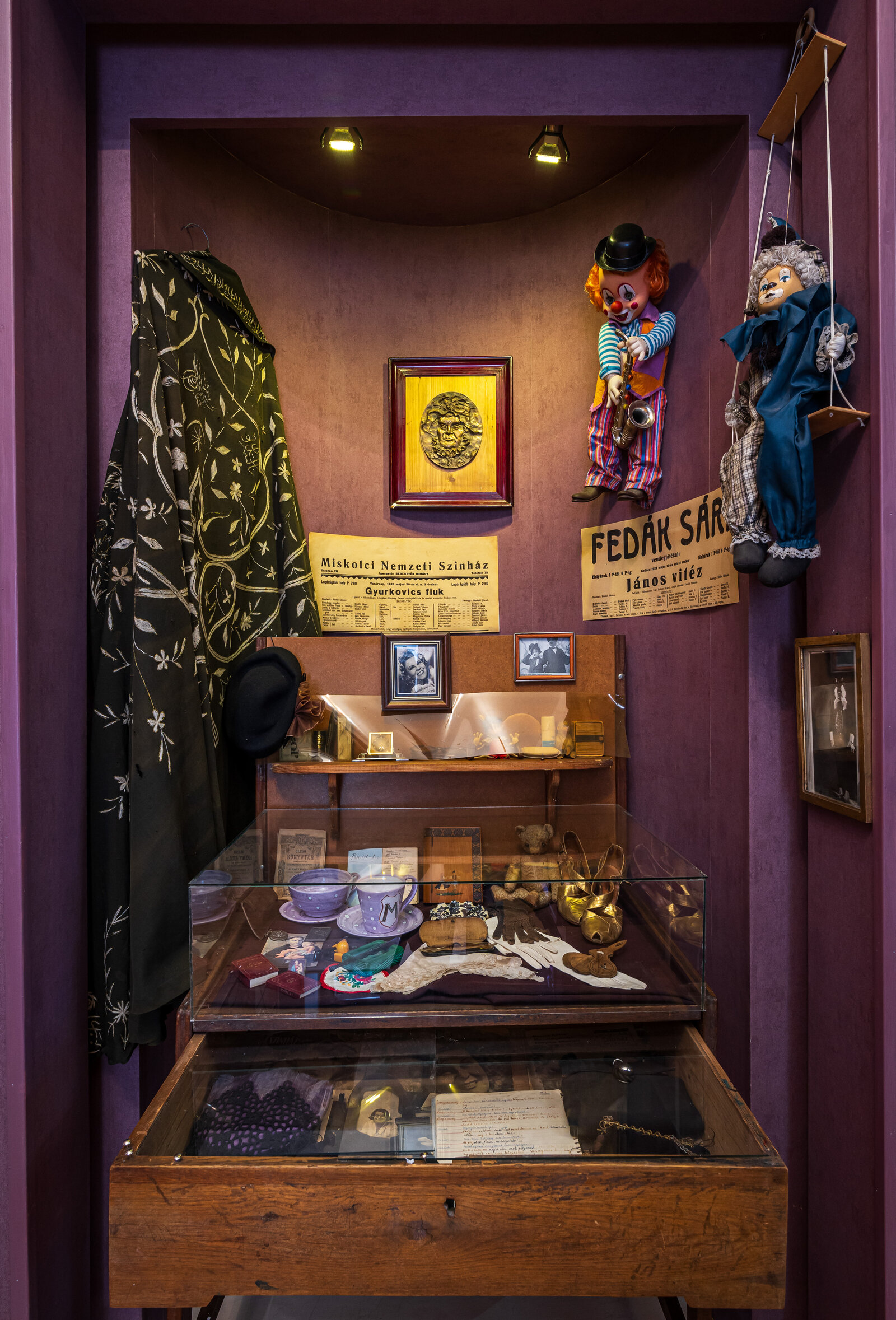
Photo: Baranczó Benedek -
Photo: Baranczó Benedek


Actor Museum - Thalia House
Discover centuries of theatrical history in Miskolc at the Actor Museum, where exciting exhibitions, contemporary art experiences, and playful children’s programmes offer enriching entertainment for the whole family!
- Strong, encrypted WIFI
- Cash
- Hungary Card accepted
- Other
- Bank card accepted
More information
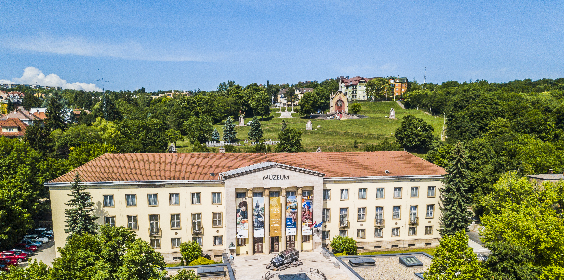
The Miskolc National Theatre, the country's oldest theatre, houses the Actor Museum within its complex, located on the site of Hungary's first permanent theatre to perform in Hungarian. Its permanent exhibition summarises the history of theatre in Miskolc from the era of travelling players to the present day. For younger visitors, there’s a children’s corner with puppets, costumes, colouring books, and creative activities. Temporary exhibitions not only include historical displays but also contemporary art exhibitions reflecting on the history of theatre arts. The museum’s cultural programmes cater to all age groups, from the youngest to retirees.
The memorial site for deceased Miskolc theatre artists is located on Déryné Street, on the plot where Hungary's first permanent Hungarian-language theatre stood from 1823 to 1843. The Actor Museum in Thalia House owes its professional prestige to collaborations with institutions such as the Moscow Theatre Museum, while its popularity is highlighted by an online poll naming it “Miskolc's Most Popular Exhibition Venue.” The Miskolc Actor Museum was established in 1996 at the initiative of actor Ferenc Gyarmathy, modelled on the Bajor Gizi Actor Museum in Budapest. The building’s renovation and the museum’s creation were supported by the Council of Europe. The plans were designed by Csaba Bodonyi, an architect awarded the Ybl and Széchenyi Prizes, and Interplan Ltd., with the project overseen by chief investment engineer Gábor Simon.
The museum documents and presents the history of Miskolc theatre and the careers of its artists to the public. The permanent exhibition, titled “This is a Joyful City, It Will Be Good for Us Here...”, summarises the history of Miskolc theatre from its beginnings to the present day, based on a script by theatre historian-museologist Gábor Mikita and designs by set designer Katalin Juhász. The first section recalls the early days of Miskolc theatre: many significant figures of 19th-century Hungarian theatre performed in Miskolc, commemorated by the marble statues in the classical building’s vaulted entrance. The upstairs exhibition rooms showcase the operations of Miskolc’s second permanent theatre, inaugurated in 1857.
The grand hall summarising the half-century of the nationalised theatre evokes the world of the stage, allowing visitors to feel as though they are in a theatrical setting: exhibition documents, photos, posters, stage designs, personal items, and theatrical structures are displayed among stylised set elements and backdrop walls.
Alongside performances that influenced Hungarian theatre history as a whole, personal stories also play an important role. Memories of Éva Ruttkai and Zoltán Latinovits meeting in Miskolc, the Latabár dynasty, Margit Dajka’s legacy, and the recollections of artists loyal to Miskolc, such as István Ábrahám and Tibor Fehér, revive unforgettable theatrical evenings. For younger visitors, there’s a children’s corner with puppets, costumes, colouring books, and puzzles.
In addition to continuously expanding its collection, the institution also engages in diverse public collection activities: its temporary exhibitions evoke some of the greatest figures in Hungarian theatre, and its cultural programmes cater to all age groups, from the youngest to retirees.
PLAY-ACTING-HOUSE
Workshops at the Actor Museum
MUSEUM MATINEE
Theatrical tales, puppet-making, costume dressing, and family board games on Saturday mornings or at specially arranged times for groups and large families.
STARS WALKING THE EARTH
This educational session introduces the outstanding figures of travelling theatre, drawing on period illustrations, memoirs, and the poems of Sándor Petőfi. The workshop aims to provide a comprehensive overview of the beginnings of Hungarian and Miskolc theatre and its flourishing during the Reform Era, highlighting the role of the “nation’s labourers.”
LET’S PLAY PUPPET THEATRE!
This workshop introduces children to the fascinating world of puppet theatre, exploring various puppet techniques and their cultural history – from rod puppets to marionettes. During the 90-minute session, participants will also create their own puppets.
Target group
-
Class trips
-
Families with younger children
-
Families with older children
-
Multigenerational programs
-
Friends
-
Seniors
-
Couples
-
Adult-friendly
Other services
Sights, programs
All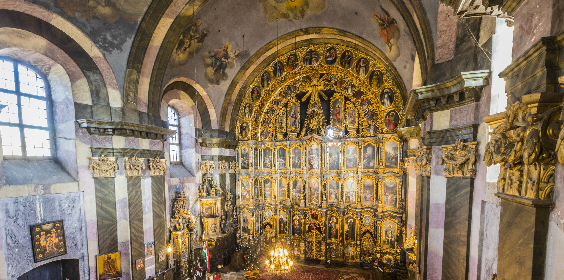

Sustainability status report
 Food and products
 Caring for people
 Decent employment
 Pollution reduction
 Caring for the climate
 Waste reduction
 Caring for water
 Caring for nature
 Caring for culture
 Management and information