Sustainability now matters in bookings too – reveals Booking.com's 2026 research
85% of travellers value more sustainable travel, and 81% of accommodation providers are already taking steps towards it. Yet, 60% of providers are unaware of independent sustainability certifications. According to new research by Booking.com, this is not just an environmental issue but increasingly a business one.
The 2026 research report by Booking.com (Creating a More Sustainable Travel and Tourism Accommodation Sector) examines how accommodation providers and guests perceive sustainability and the role independent certifications play in travel decisions.
The findings highlight a significant shift: it’s no longer enough to implement sustainability measures. These need to be presented to guests in a way that is clear, credible, and, where possible, independently verified.
Travellers seek sustainable options but want proof
According to the research, surveyed travellers:
-
85% consider sustainable travel important or very important.
-
58% plan to use the sustainability certification filter for their next booking.
-
37% are sceptical about whether travel options marketed as sustainable truly are.
-
41% want clearer information about sustainability features.
This presents a major opportunity but also a warning for tourism businesses. Guests are increasingly curious about how hotels conserve water and energy, reduce waste, or support local communities.
Instead of generic “green” or “eco-friendly” promises, they are looking for specific actions and reliable information.
Accommodation providers are taking action – but certifications remain unfamiliar to many
According to a survey conducted by Booking.com with 3,715 accommodation partners across 18 countries, 82% of businesses consider sustainability important, and 81% are already implementing some form of sustainable practice.
However, 60% of them have never heard of independent sustainability certifications. This figure was 53% in 2025.
The issue is often not a lack of commitment but limited access to information and practical support.
The research also identified additional barriers: 26% of providers are uncertain about the return on investment for sustainability initiatives, while 30% struggle to find suitable alternatives to their current products and services.

Independent sustainability certifications can also create business value
According to the Booking.com report, accommodation providers associate several benefits with obtaining independent certifications:
-
56% – can help attract more sustainability-conscious guests.
-
46% – enhances the credibility of sustainability claims.
-
42% – can positively impact guest experience.
-
38% – can lead to cost savings, such as reduced energy and water consumption.
-
35% – provides a competitive advantage over other accommodations.
By 2025, Booking.com had listed over 28,000 accommodations with independent sustainability certifications, accounting for around 100 million booked room nights.
An experiment conducted by the booking platform between September 2025 and March 2026 revealed an intriguing result. When the sustainability certification badge was not displayed, bookings in the analysed web and iOS traffic were statistically significantly 0.25% lower.
This doesn’t mean that every certified accommodation automatically receives more bookings. However, the findings indicate that visibly displaying credible certifications can measurably influence booking decisions.

Sustainability is becoming increasingly important in business travel
It’s not just leisure travellers who are concerned about this issue. According to the report, 16% of accommodations with at least 11 rooms and 20% of those catering primarily to business travellers occasionally or frequently receive corporate requests that include sustainability requirements.
At one of Booking.com’s corporate sales partners, the proportion of room nights booked at certified accommodations rose from 15% to 27% after certification badges were introduced. At another partner, this figure increased from 20% to 24%.
The data suggests that independent certifications are gaining importance in corporate travel planning, procurement processes, and business partnerships.

How can I-DEST help?
One of the key takeaways from the Booking.com research is that implementing, measuring, and credibly communicating sustainability measures are interconnected tasks.
The I-DEST aims to support this development process for tourism businesses and destinations.
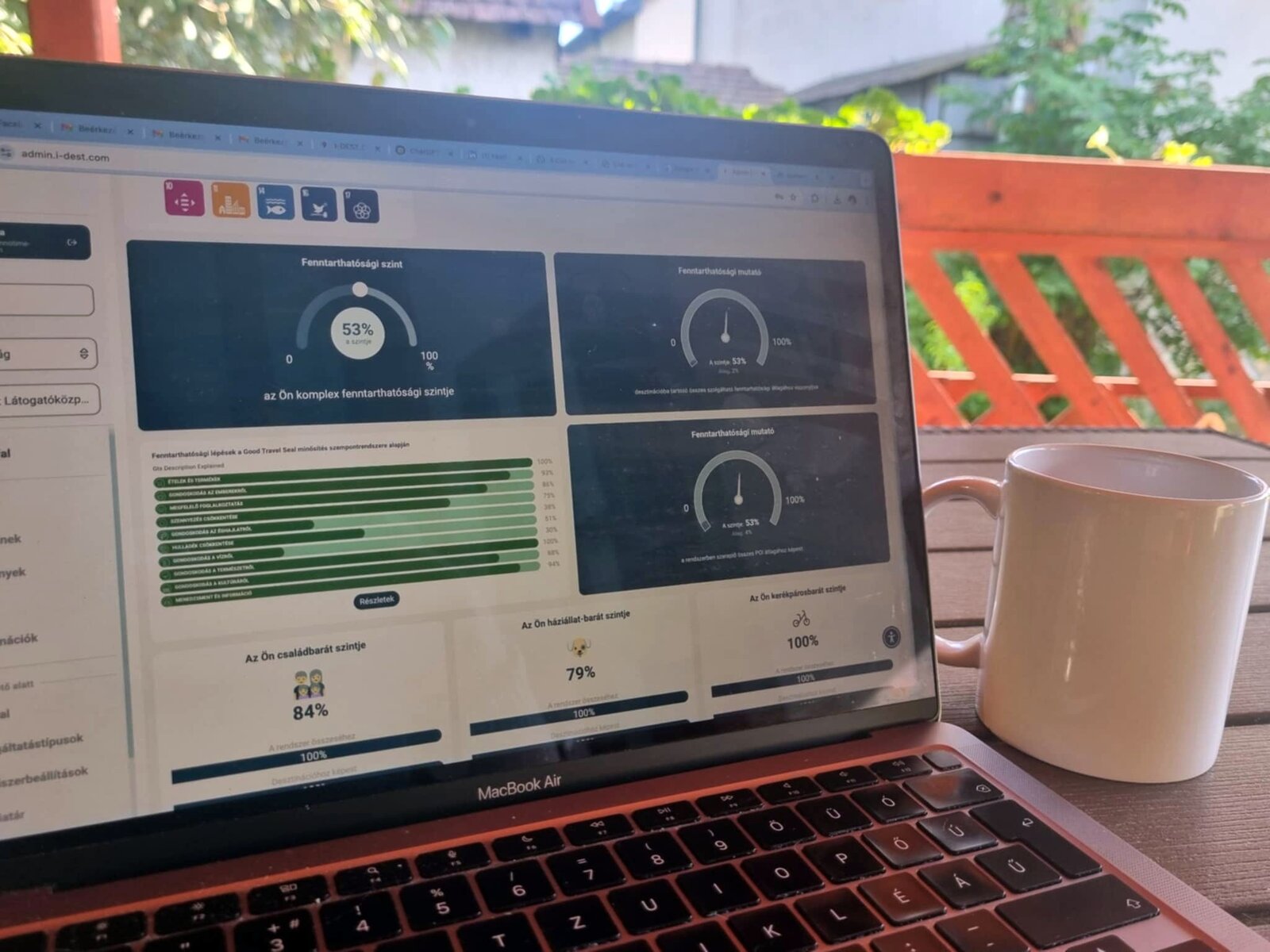
Providers can use the free GSTC-based sustainability self-assessment questionnaire to review their practices, identify areas for improvement, and track their progress.
I-DEST also enables the presentation of specific sustainability measures: guests can learn about energy-saving initiatives, the use of local products, waste reduction, or accessibility services. The system also displays information linked to the UN’s Sustainable Development Goals (SDGs).
It’s important to note that I-DEST’s self-assessment is not an independent sustainability certification. Providers’ self-reported information and any certifications issued by external organisations must be treated separately.
Nevertheless, self-assessment can be a useful starting point for businesses looking to join internationally recognised, independent certification programmes in the future.
Sustainability becomes a competitive advantage when it’s credibly visible
Based on Booking.com’s 2026 findings, sustainability is no longer just a social expectation or an environmental commitment. It is increasingly tied to the quality of tourism services, guest trust, and business competitiveness.
For businesses, the next step doesn’t necessarily involve another major investment. In many cases, progress can be achieved by organising existing measures, measuring results, identifying gaps, and exploring suitable certification options.
In the future of tourism, the question will increasingly shift from who claims to be more sustainable to who can substantiate it with concrete actions and credible evidence.
Source: Booking.com – Creating a More Sustainable Travel and Tourism Accommodation Sector, Research Report, 2026. The accommodation provider survey involved 3,715 partners across 18 countries in January 2026. Guest-related findings are based on separate research by Booking.com involving 32,500 respondents across 35 countries and territories.
More News
All-
4 Mins
Read -
3 Mins

Read -
5 Mins

Read -
4 Mins

Read -
4 Mins

Read -
4 Mins

Read -
3 Mins

Read -
3 Mins
Read -
5 Mins

Read -
6 Mins

Read -
3 Mins

Read -
3 Mins

Read -
4 Mins

Read -
3 Mins

Read -
7 Mins

Read -
19 Mins
Read -
7 Mins

Read -
8 Mins
Read -
5 Mins

Read -
4 Mins

Read -
7 Mins

Read -
5 Mins

Read -
3 Mins

Read -
4 Mins

Read -
3 Mins

Read -
3 Mins

Read -
3 Mins
Read -
12 Mins

Read -
4 Mins
Read -
4 Mins

Read -
4 Mins

Read -
4 Mins

Read -
5 Mins
Read -
4 Mins

Read -
3 Mins

Read -
8 Mins

Read -
4 Mins
Read -
6 Mins
Read -
4 Mins

Read -
5 Mins

Read -
6 Mins

Read -
5 Mins

Read -
3 Mins

Read -
7 Mins

Read -
7 Mins

Read -
5 Mins

Read -
6 Mins

Read -
6 Mins

Read -
3 Mins

Read -
3 Mins

Read -
10 Mins

Read -
6 Mins

Read -
5 Mins

Read -
4 Mins

Read -
5 Mins

Read -
4 Mins

Read -
6 Mins

Read -
7 Mins

Read -
5 Mins

Read -
3 Mins

Read -
4 Mins

Read -
4 Mins

Read -
4 Mins

Read -
6 Mins

Read -
3 Mins

Read -
1 Mins

Read -
2 Mins

Read -
2 Mins

Read -
3 Mins

Read -
3 Mins

Read